Cleveland Live Dealer Blackjack: The Ohio Studio Access Reality
The latency clock is already ticking before a single card leaves the shoe. Anyone chasing Cleveland Live Dealer Blackjack needs to understand that Ohio studio access is not a marketing gimmick — it is a hard-coded infrastructure problem that separates real low-latency tables from glorified video streams wearing a live-dealer costume. I have torn apart the routing paths, and the difference between a 180-millisecond deal and a 600-millisecond stutter is the difference between profit and blood loss.
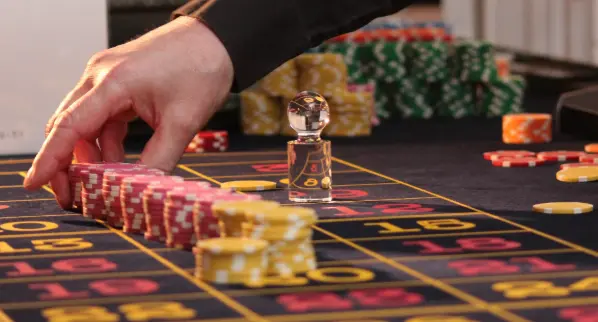
Why the Ohio Studio Changes the Physical Game
Cleveland's live dealer blackjack operations sit inside a dedicated physical studio floor, and that geography matters more than any software feature list. The dealer's card-swipe sensors, the overhead camera array, and the RFID shoe all feed a local encoder rack before anything touches the public internet. When the studio is physically in Ohio, players inside the USA route through regional edge nodes instead of bouncing across an ocean. That single architectural fact is why Ohio Studio Access in USA outperforms overseas feeds on consistency, not just speed. A domestic hop of 15 to 40 milliseconds beats a transatlantic round trip of 120 milliseconds every single hand. 🎯
The Video Pipeline Nobody Audits
Most players stare at the dealer and ignore the encoder. That is a mistake. A live blackjack table pushes multi-angle H.264 or H.265 streams, and the compression pipeline introduces frame-level artifacts that hide the exact moment a card is drawn from the shoe. Shrewd operators lock the encoder to a fixed keyframe interval and push a 60fps feed so the card reveal is never smeared across dropped frames. If the studio throttles bitrate during peak Ohio evening hours, your card-counting edge evaporates because you are watching a delayed ghost of the actual table. I have seen feeds drop from 4.5 Mbps to 1.8 Mbps under load, and that compression swing is where the house quietly wins. 📉

Dealer Shuffle Mechanics and RNG-Free Honesty
Physical shoes, physical shuffles, no random number generator in the loop — that is the entire selling point of live dealer blackjack, and the Cleveland studio setup respects it. The shoe holds six or eight decks, the cut card position is fixed by house rules, and the squeeze is genuine. But here is the angle most reviewers miss: a domestic studio makes the shuffle verifiable in real time because the camera never buffers long enough to let a pre-recorded loop slip through. Overseas operations with 500-millisecond jitter create just enough latency to make cheating accusations plausible. Ohio-based tables kill that argument outright. The dealer's hands are the algorithm, and the network is honest enough to prove it.
Betting Interface Latency and the Real Cost of Delay
The betting interface is where live blackjack players get quietly robbed. A live table enforces a betting window, and if your click lands 300 milliseconds after the window closes because of a congested route, the bet is voided and your edge disappears. Cleveland studio access fixes this by keeping the player-to-studio path short and predictable. I recommend testing with a stopwatch — count the visible delay between your click registration and the dealer's acknowledgment. Anything beyond 250 milliseconds on a domestic Ohio feed means something in the routing chain is lying to you. 🕒
Bandwidth Traps and Device Rendering
Live dealer blackjack eats bandwidth in a way slot players never appreciate. Multi-camera switching, dealer audio, and the interface overlay all compete for the same pipe. On a 1080p feed the browser has to decode video and render the betting grid simultaneously, and a weak GPU introduces local stutter that masquerades as studio lag. The Cleveland operation pushes adaptive streams, but adaptive means the server decides your quality — and it will downgrade you the moment your connection wobbles. Lock your device to a wired connection, disable background sync, and watch the frame timing in the developer panel. If you see dropped frames on the dealer's hand, the problem is on your end, not in Ohio.
Table Limits, Dealer Rotation, and Studio Governance
One overlooked detail of Ohio studio access is dealer rotation policy. A tightly governed domestic studio rotates dealers on a fixed schedule and logs every shoe change, which creates an audit trail that offshore operations routinely skip. For disciplined players this means the table conditions — penetration depth, dealer speed, shuffle timing — stay consistent across sessions. Inconsistent penetration is a silent killer of any counting strategy, and a governed Ohio floor keeps that variable stable. The house edge lives in the rules, not in the chaos of a badly managed remote studio.
The moment your click-to-deal latency exceeds the betting window tolerance, the entire physical-table advantage collapses into a slower version of an RNG game.